When Can a Baby Go in a Bike Seat? An Age-by-Age Guide
It's one of the most common questions cycling parents ask: when can my baby actually come along for the ride? The answer isn't always straightforward, and the conflicting advice online doesn't help.
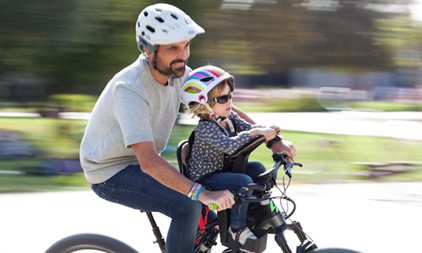
Most kids can ride in child bike seats from around nine months old, once they can sit up unaided and hold their head steady with a lightweight helmet on. But age alone isn't the deciding factor. Your baby's physical development matters far more than the number on the calendar.
Here's a simple age-by-age breakdown to help you figure out when the time is right, what kind of setup suits each stage, and how to make those first rides a success.
Before Nine Months
Standard bike seats aren't suitable for babies under nine months. At this age, most little ones haven't developed the neck strength to support a helmet or hold their head steady over bumps. The UK's EN 14344 safety standard for child bike seats reflects this, with most seats rated from nine months at the earliest.
If you're keen to get back on two wheels before then, a cargo bike with a car seat adapter is the main option. These keep your baby fully reclined and supported in their own car seat, which avoids the neck-strength issue entirely. They're a significant investment though, and more common in the Netherlands than the UK.
For most families, the realistic answer at this stage is: hang tight. The wait is shorter than it feels.
Nine to Twelve Months: The Green Light (With Caveats)
This is when cycling together becomes a real possibility. In the UK and across Europe, nine months is generally considered the earliest safe age for a child bike seat, provided your baby meets a few key milestones.
Your baby is likely ready if they can:
* Sit up unaided on the floor (not just propped up with cushions)
* Hold their head steady and upright for sustained periods
* Support the weight of a lightweight helmet without their head tipping forward
* Stay alert and engaged for 15 minutes or more without getting floppy
If your baby ticks all four, they're likely ready. If they're nine months but not quite there yet, there's no rush. Every child develops at their own pace.
At this stage, front-mounted seats are a popular first choice. They sit between your arms so your baby gets a great view, and you can keep an eye on them without turning around. If you're looking at bike seats for kids under 12 months old, front-mounted options tend to be the go-to for parents of younger riders.
One thing worth noting: the US recommendation is 12 months, based on guidance from the American Academy of Pediatrics. The UK and EU set the bar at nine months. The difference comes down to how each body weighs the evidence. Neither is wrong, but if you're following UK advice, nine months with the right milestones met is considered safe.
Twelve to Eighteen Months: Settling In
By their first birthday, most children have solid head and neck control and are well suited to regular bike rides. This is when you can start extending trip lengths and exploring a bit further.
Front-mounted seats still work brilliantly at this age. Your toddler gets the interaction they crave, and you get the reassurance of seeing them right in front of you. As they get bigger, you might start to notice the weight a little more when pedalling, but it's manageable for most riders.
A reclining seat is worth considering if your child tends to nod off on rides. Sleeping toddlers slump forward in upright seats, which isn't comfortable or safe. A seat that tilts back a few degrees gives their head somewhere to rest. An inflatable neck pillow (the kind sold for car seats) can help too.
Eighteen Months to Three Years: Expanding the Adventure
Now you're into proper adventure territory. Your toddler is heavier, more opinionated, and probably pointing at every dog and bus you pass.
At this stage, many families switch to a rear-mounted seat for longer rides. Rear seats handle the extra weight more easily, and most accommodate children up to 22kg (roughly five or six years old). The trade-off is that you can't see your passenger as easily, so a handlebar mirror is a handy addition.
Some families stick with front-mounted seats right through this period. Both approaches work. What matters is that your child is comfortable, secure, and that the bike handles safely with their weight on board.
Three Years and Beyond: What Comes Next
From around three, your child might be ready to start pedalling themselves. Balance bikes are a fantastic next step, and many children transition to pedal bikes by four or five.
But don't assume the bike seat days are over. Plenty of children ride in rear seats well past their third birthday, especially for longer trips or when you need to get somewhere quickly. The weight limit on the seat matters more than age here.
Tips for Your First Ride Together
Keep it short. Ten to fifteen minutes is plenty for a first outing. See how your baby responds before committing to anything longer.
Choose flat, traffic-free paths. A quiet park trail or canal towpath is ideal. Save the road riding for when you're both confident.
Time it between feeds and naps. A well-rested, recently fed baby is far more likely to enjoy the experience.
Practise without your baby first. Load the seat with a bag of something heavy (a sack of potatoes works well) and take a short spin. The bike handles differently with weight on board, and it's better to get used to that without a passenger.
Layer up. You're generating heat by pedalling. Your baby isn't. Add at least one extra layer on them compared to what you're wearing, and always pack a rain cover.
Cycling together is one of those experiences that gets better with time. Those first nervous wobbles turn into confident rides, and before you know it, your toddler will be pointing at the bike and asking to go.