How to Get Over Post Pregnancy Hair Loss (Dublin Guide)
If you’ve recently had a baby and noticed more hair in your brush, shower drain, or on your pillow, you’re not alone. Post-pregnancy hair loss is extremely common, especially across Dublin and Ireland where new mums often juggle recovery, work, and childcare with little time to focus on themselves.
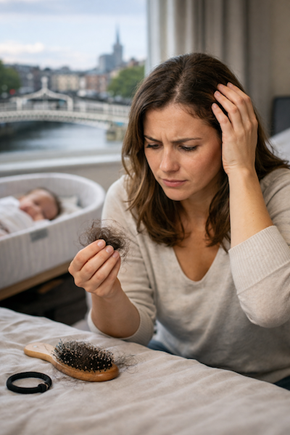
The good news? It’s usually temporary. And even better, there are proven ways to speed up recovery, protect your hair, and restore thickness if needed.
What Causes Post Pregnancy Hair Loss?
Postpartum hair loss (also called telogen effluvium) is triggered by hormonal changes after childbirth.
During pregnancy, higher levels of oestrogen keep hair in a growth phase longer than usual. After birth, those hormone levels drop and all that “extra” hair begins shedding at once.
Key timeline:
* Starts: Around 2–4 months postpartum
* Peaks: 4–6 months
* Resolves: Typically within 6–12 months
What’s Normal (And What’s Not)?
It can feel alarming, but losing 50–150 hairs per day is normal postpartum shedding just makes it more noticeable.
Normal:
* Thinning around temples and hairline
* Increased shedding in shower or brushing
* Hair feeling less dense overall
Not normal (get checked):
* Bald patches
* Hair loss lasting beyond 12 months
* Itching, redness, or scalp pain
If you’re unsure, a GP in Dublin can rule out thyroid issues or nutrient deficiencies.
7 Ways to Recover From Post Pregnancy Hair Loss
1. Focus on Nutrition First
Hair regrowth starts internally.
Key nutrients to prioritise:
* Iron (low levels are common after childbirth)
* Biotin and B vitamins
* Zinc
* Protein
Think: lean meats, eggs, leafy greens, nuts, and whole grains.
If needed, Irish pharmacies often stock postnatal supplements designed for hair recovery.
2. Be Gentle With Your Hair
Your hair is in a fragile shedding phase, don’t make it worse.
Avoid:
* Tight ponytails or buns
* Excessive heat styling
* Harsh chemical treatments
Switch to:
* Wide-tooth combs
* Silk pillowcases
* Gentle, sulphate-free shampoos
3. Use Volumising Styling Tricks
This doesn’t fix the root issue, but it helps confidence massively.
* Blow-dry at the roots for lift
* Use lightweight volumising mousse
* Try shorter styles or layers
Many Dublin salons offer “postpartum cuts” designed to disguise thinning.
4. Manage Stress (Easier Said Than Done)
Stress can prolong hair shedding and let’s be honest, new motherhood isn’t exactly relaxing.
Even small wins help:
* Short walks along Phoenix Park
* 10-minute breathing or mindfulness sessions
* Asking for help (seriously, do it)
5. Try Targeted Hair Treatments
Topical treatments can support regrowth:
* Caffeine-based shampoos
* Scalp serums
* Minoxidil (only after medical advice, especially if breastfeeding)
Clinics across Dublin increasingly offer non-invasive scalp treatments as well.
6. Consider Professional Hair Restoration Options
If your hair isn’t bouncing back after 9–12 months, it might be worth exploring medical-grade solutions and start considering hair transplants in Dublin.
In Dublin, clinics offer:
* PRP (Platelet-Rich Plasma) therapy
* Low-level laser therapy
* Mesotherapy for the scalp
For more advanced or long-term thinning, surgical options like Hair Transplant Surgery are available, though this is usually only considered in persistent cases.
7. Give It Time (Most Important)
This is the part no one wants to hear, but it matters.
For most women, hair naturally returns to its pre-pregnancy thickness within a year.
The shedding phase feels dramatic, but it’s part of the cycle resetting.
Best Places in Dublin to Seek Help
If you want professional advice, Dublin has strong options:
* Trichologists (hair and scalp specialists)
* Dermatology clinics
* Hair restoration clinics offering advanced treatments
Look for clinics that specialise in female hair loss, postpartum cases require a different approach than typical male pattern hair loss.
When to Take Action
You should consider professional help if:
* Hair loss continues beyond 12 months
* You notice widening part lines or visible scalp
* Your confidence is taking a hit (this matters more than people admit)
Final Thoughts
Post pregnancy hair loss can feel like yet another thing your body throws at you — just when you’re already stretched thin.
But here’s the reality:
* It’s common
* It’s usually temporary
* And you have options if it doesn’t resolve
Whether it’s improving your nutrition, adjusting your hair care, or exploring hair restoration in Dublin — you’re not stuck with it.