Easy Gardening Activities for Toddlers and Pre-Schoolers
Gardening with toddlers and pre-schoolers doesn’t need to be complicated, tidy or particularly productive. In fact, the less pressure there is to “get it right”, the more enjoyable it can be for everyone. For young children, gardening is about sensory play, curiosity and spending time outdoors together. Simple activities like planting a few vegetable seeds, watering pots and watching changes happen over time can become lovely learning moments that fit naturally into everyday family life.
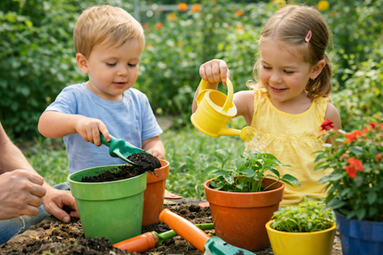
You don’t need a large garden, specialist tools or lots of knowledge to get started. A few pots, some soil and a willingness to let things be a bit messy are more than enough.
Why gardening works so well for young children
Toddlers and pre-schoolers learn best through doing. Gardening offers hands-on experiences that engage all the senses: feeling soil between fingers, noticing colours, smelling leaves and hearing water splash into pots. These experiences help children build fine motor skills, coordination and confidence, without it feeling like structured learning.
Gardening also introduces patience in a very gentle way. Young children aren’t expected to wait long periods, but checking plants each day and noticing small changes helps them understand that some things take time. There’s no right or wrong outcome, just exploration.
Starting with simple set-ups
The key to gardening with under-fives is keeping things manageable. Containers are often easier than garden beds, as they’re accessible and can be moved around. Old plant pots, buckets or even recycled containers work well, as long as there are drainage holes.
Let children help fill pots with soil. This part is often the most exciting, even if it results in soil on the floor. Scooping, tipping and patting soil down are all valuable activities that build hand strength and coordination.
Choose a spot that’s easy to reach so children can see their plants regularly. Windowsills, patios or a corner of the garden where you pass often are ideal.
Planting seeds together
Planting seeds is one of the simplest and most rewarding activities for young children. It’s also a great way to practise early counting and turn-taking. Toddlers can drop seeds into holes, while pre-schoolers might enjoy covering them gently with soil.
Explain what you’re doing in simple terms, without overloading them with information. Phrases like “the seed is going to sleep in the soil” or “the plant will grow roots under the ground” help children understand what’s happening in a way that feels accessible.
Don’t worry if seeds are planted too close together or too deep. Perfection isn’t the goal; involvement is.
Watering as a daily routine
Watering plants is often a favourite task for toddlers. Small watering cans or cups work well, giving children a sense of responsibility without being too heavy. This is also a good opportunity to talk about care and routine.
You can build watering into your day, perhaps after breakfast or before dinner. Even if plants don’t need water every day, checking the soil together helps children practise observation skills. Is the soil dry or damp? Does the plant look the same as yesterday?
Expect spills and over-watering, especially at first. Placing pots outside or on trays can help reduce stress for adults while allowing children to explore freely.
Watching plants grow
One of the most exciting parts of gardening for young children is spotting the first signs of growth. Tiny green shoots appearing from the soil can feel almost magical. Encourage children to look closely and describe what they see.
You might like to take photos every few days or mark plant height on a simple chart. These small activities help children notice change over time and build early comparison skills, without needing worksheets or formal tasks.
Some days, nothing will seem to happen, and that’s okay. Learning that not everything changes immediately is part of the process.
Learning through play and conversation
Gardening naturally supports early learning, but it doesn’t need to be labelled as such. Conversations about colour, size and number happen easily when you’re planting and caring for plants together.
You might count how many leaves a plant has, compare which one looks taller, or talk about the weather and how it affects growth. These moments feel natural because they’re based on something the child is already interested in.
Storytelling can also be woven in. Pretend the plants are characters that need care, or imagine where roots might be growing underground. This helps children connect emotionally with the activity.
Accepting mess and unpredictability
Gardening with toddlers will never be tidy, and plants won’t always thrive. Seeds may not grow, pots might get knocked over and leaves may be pulled off. This can be frustrating for adults, but it’s all part of learning.
Treating these moments calmly helps children understand that mistakes are normal and manageable. If a plant doesn’t survive, it’s an opportunity to talk about trying again rather than something going wrong.
Keeping expectations realistic makes gardening a positive experience rather than a stressful one.
Adapting activities for different ages
Toddlers often enjoy the physical aspects of gardening most, such as digging and watering. Pre-schoolers may show more interest in what plants need to grow and enjoy checking progress regularly.
You can adapt activities by giving older children slightly more responsibility, such as remembering when to water or helping harvest vegetables when they’re ready. Younger children can still take part in simpler ways, even if that just means carrying tools or pointing out changes.
Creating calm, shared moments
Perhaps the biggest benefit of gardening with young children is the time spent together without distractions. It offers a chance to slow down, be present and share a simple activity that doesn’t rely on screens or structured plans.
These moments often become part of daily routines, creating a sense of familiarity and comfort for young children. Over time, gardening can become something they associate with calm, connection and being outdoors.
Easy gardening activities don’t need to produce perfect plants or impressive results. For toddlers and pre-schoolers, the value lies in the experience itself: touching soil, watching something grow and sharing that journey with a trusted adult. With a relaxed approach and a little patience, gardening can become a gentle and rewarding part of early childhood.