Creating Safe Garden Play Areas for Little Ones
Designing a safe outdoor space helps children move, explore, and play with confidence. In many UK gardens, weather and worn ground can limit how often children use the space. Families often look for solutions that keep gardens practical without ongoing repair or preparation.
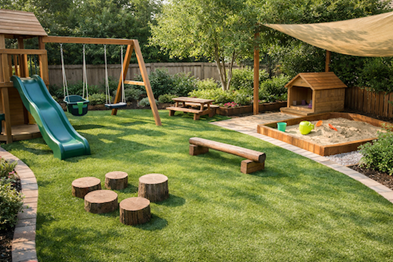
A garden play area works best when it stays usable in everyday conditions. Reliable ground surfaces support regular outdoor time and make it easier for parents to encourage play throughout the year.
Why Garden Play Spaces Matter for Child Development
Outdoor play supports physical development by helping children build strength, balance, and coordination. The benefits of outdoor play in early years extend beyond movement, allowing children to explore how their bodies respond to space, texture, and changing environments through active play.
Time spent outside also supports emotional development. Open spaces give children room to release energy, manage frustration, and develop independence through self-directed play. These experiences help children build confidence at their own pace.
Gardens also provide important sensory input. Children notice texture underfoot, temperature changes, and differences between shaded and open areas. These experiences support learning and problem-solving through direct interaction with the environment.
A clearly defined play space gives children a sense of security. When boundaries feel predictable, children explore more freely and engage more deeply with play activities, both alone and with others.
Essential Safety Features for Garden Play Areas
Safety starts at ground level. Falls are common during play, so surfaces that absorb impact reduce the likelihood of minor injuries. Even, consistent ground also lowers the risk of slipping during fast movement.
Using artificial grass in family play zones helps create a stable, cushioned surface that supports daily outdoor activity while keeping gardens usable in all weather conditions.
Clear edges help children understand where play is encouraged. Low fencing, planted borders, or visual markers guide movement without creating hazards. All boundary elements should be smooth and free from sharp edges.
Sun protection also matters. Shade from trees, sails, or canopies helps protect sensitive skin and keeps play areas comfortable during warmer months. Planning shade alongside play features supports longer outdoor sessions.
Creating Low-Maintenance Play Surfaces
Low-maintenance surfaces reduce the effort needed to keep gardens safe and usable. Artificial grass removes common issues associated with natural turf, including muddy garden areas, bare patches, and uneven ground caused by frequent play.
A consistent surface helps children move confidently. Parents benefit from fewer repairs and less time spent managing ground conditions after rain or heavy use.
Different grass finishes suit different activities. Softer piles work well for younger children, while slightly firmer options cope better with running games and shared play. Selecting the right pile height balances comfort and durability.
Drainage plays a key role in usability. Quality backing allows rainwater to pass through quickly, preventing puddles and keeping surfaces dry. Faster drainage means children can return to play sooner after rainfall.
Many families value surfaces that do not require fertilisers or weed treatments. Avoiding these products supports safer play and simplifies ongoing garden care.
Designing Age-Appropriate Play Zones
Children play differently at each stage of development. Younger children benefit from simple layouts with soft ground, gentle slopes, and clear sightlines from the house. Well-planned toddler play spaces help parents feel confident while children explore safely at their own pace.
Children aged three to five enjoy features that encourage climbing, balancing, and imaginative play. Low structures, stepping elements, and open-ended play items work well when placed on stable ground.
Older children need space to move freely. Open areas support ball games, races, and group activities. Adequate spacing between equipment reduces collision risks and allows children to stay active safely.
Gardens shared by children of different ages benefit from flexible layouts. A single surface can support varied play styles while keeping all children within view.
Adding Play Value While Maintaining Safety
Combining materials adds interest to play areas. Natural features such as smooth timber elements or raised platforms introduce variety without compromising safety when positioned carefully.
Storage helps keep play areas organised. Weatherproof boxes, benches with storage, or small sheds reduce clutter and limit trip hazards. Keeping toys contained also helps preserve the play surface.
Small additions can refresh a space. Rotating toys, adding seasonal shade, or repositioning equipment keeps play areas engaging without major changes.
Furniture and features should always remain secure. Regular checks ensure fixings stay tight and surfaces remain suitable for children’s use, especially in areas where equipment is moved or adjusted over time in line with play equipment safety standards.
Garden Play Area Safety Audit
Routine checks help maintain a safe environment over time. Inspect soft areas under equipment, confirm edges remain secure, and ensure drainage continues to function after rain.
Plants near play zones should always be non-toxic. Any sharp or brittle growth should be trimmed back to avoid injury.
Shade coverage should be reviewed as seasons change. Regular maintenance supports long-term safety and keeps play areas ready for everyday use.
A well-planned garden play area supports safe movement, confident exploration, and regular outdoor time. With consistent surfaces, clear layouts, and simple safety checks, families can rely on their garden in everyday conditions. Thoughtful design choices help outdoor spaces grow with children and remain practical throughout the year.