Creating a Calm and Magical Bedtime Environment for Toddlers
If you've ever found yourself crouching by the door in the dark, one sock raised mid-step, listening for the moment your toddler clocks that you've left the room, you already know. You don't need anyone to tell you bedtimes can be brutal.
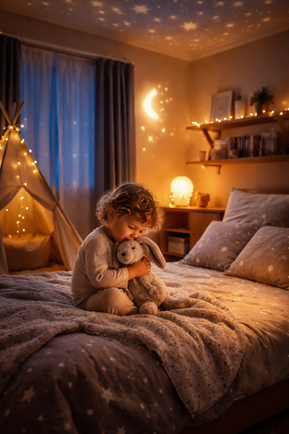
The stalling is the thing that gets you. The sudden thirst. The one more story that becomes three. By the time you finally get downstairs, you're too done to enjoy the quiet.
What genuinely helped our bedtimes wasn't a new routine or a stricter schedule. It was the room itself.
Why the space matters more than the system
Toddlers are wired to pick up on everything around them. Light, temperature, noise, the difference between a room that feels predictable and one that doesn't. Their nervous systems are still developing and they read their environment constantly, even when you don't think they are.
A perfectly timed routine falls flat in a room that's fighting against you. Too bright, too much going on, toys in sight-lines, the wrong kind of noise. The bedroom should be doing the heavy lifting. Most of the time, it isn't.
Lighting is the thing most people get wrong
Overhead lights are not your friend after 6pm. The cooler and brighter the light, the harder it is for the brain to wind down, melatonin suppression is a real thing, and even a lamp with the wrong colour temperature is enough to keep a toddler buzzing.
Switch to something warm. Amber or orange range, dimmed as bedtime gets closer. A plug-in night light, a small salt lamp, a side lamp on its lowest setting. Some families add a custom neon light which pulls double duty as a soft night light and makes the room feel genuinely theirs, not just a room they sleep in. Neon Daddy have some great ideas for different options here.
The comfort object you might be underusing
If your child has a tatty rabbit or a specific blanket that goes everywhere with them, you probably already know how important it is. If they don't have one yet, introduce a soft toy consistently at sleep times, let them carry it through the whole wind-down. Bath. Teeth. Story. Lights down. It starts to mean something because it's always there for that part.
The goal is that by the time you're trying to leave the room, the object itself is signalling this is the sleeping part. Kids self-soothe better when they've got something familiar in their hands. That's not a trick, it's just how they're built.
Keep the routine short or it unravels
Predictability helps toddlers feel safe. A clear sequence, bath, pyjamas, teeth, story, lights down works because the brain starts anticipating sleep before sleep arrives. Twenty to thirty minutes is about right. Go longer and you're giving them more runway for negotiations. They'll find the gaps. Keep it tight and consistent and there's less to derail.
The hour before bed is part of the routine too
Screens raise cortisol. So does boisterous play, loud music, anything with too much going on. If you're trying to shift a child from full chaos to sleep-ready in ten minutes, it's always going to feel like a fight.
Build in at least thirty minutes of calm before the routine even starts. Colouring, puzzles, sitting together doing something quiet. The transition into bed goes smoother when their body has already started to slow down. You're not starting from zero.
What makes a room feel safe
Blackout curtains are worth every penny, especially from April onwards when the evenings stay light until ridiculous o'clock. A white noise machine or a fan running in the background can mask the household sounds that jolt them awake, the front door, someone laughing downstairs, a car outside.
Temperature should sit around 16 to 18 degrees for a good nights sleep. Cooler than most people expect.
Beyond the basics, think about what makes the room feel like their space. A star projector casting soft shapes across the ceiling. Their favourite books on a shelf they can actually reach. Something on the wall they like looking at. It doesn't need to be expensive, it needs to feel personal.
Toys in sight-lines are a problem. If a toddler can see their toys, they're thinking about them. Keep toys tucked away, books visible. Small distinction but can make a real difference.
A few low-cost ideas that actually shift the atmosphere
Fairy lights on a fixed warm setting work well. Soft projectors that throw gentle shapes or clouds onto the ceiling are worth a look. A small rug in a calming colour makes the floor feel different underfoot, which sounds minor until you've done it.
Anything personal to your child, their name somewhere on the wall, a character they love rendered in muted tones rather than bold primary colours, it helps settle them into the space. The aim is calm familiarity. Not stimulation.
It takes a few nights to land
They'll still call out. Still ask for water at the exact moment you've sat down. But when the room itself is working with you, you'll notice it in how quickly they give in to sleep.
There's something genuinely good about standing at that door and watching it happen in a room you've put a bit of thought into. It stops feeling like you've survived something. It starts feeling like a thing you do together.