3 Fun Ways to Boost Toddler Outdoor Play
Between nap schedules and snack times, it can be tough to squeeze in fresh-air adventures. Yet the Centres for Disease Control and Prevention recommends at least 60 minutes of active play every day for young children. This goal is much easier to hit once you step outside.
Fresh air, uneven terrain, and open spaces invite toddlers to move their bodies. Studies show that children who regularly play outside tend to be healthier and happier. Below you’ll find the “why,” the “how,” and three ready-to-try play ideas to get your family out the door today.
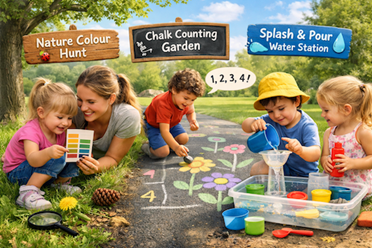
1. Nature Colour Hunt
Give your child a paint-sample card from the hardware store. Together, search the yard or local park for items that match each shade. Green moss, brown bark, and yellow dandelions are great finds. Colour recognition, observation skills, and language practice occur naturally.
2. Chalk Counting Garden
Draw several flower stems on the driveway. Have your toddler toss a pebble onto a stem and then “plant” the matching number of chalk petals. Count aloud as they draw each one. This encourages early number sense plus fine-motor practice gripping the chalk.
3. Splash & Pour Water Station
Fill a shallow bin with water, add measuring cups, sponges, and empty squeeze bottles. Encourage pouring, squeezing, and “filling the lake.” This simple setup provides endless entertainment. Cause-and-effect learning, hand strength, and calming sensory input are key benefits.
Pro Tip: Focus on the process, not the outcome. If the "colour hunt" turns into a "throw leaves" game, roll with it. Toddler learning happens best through unstructured exploration rather than rigid adherence to rules.
Why Outdoor Play Matters: A Quick Benefit Snapshot
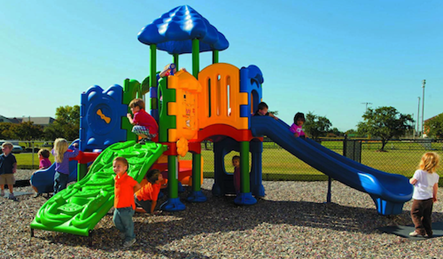
Running, climbing, and crawling strengthen large muscles and improve balance. Studies show that regular physical activity helps children be fit and healthy, improves self-esteem, and decreases the risk of illnesses like heart disease and stroke later in life.
Experts emphasise that children should engage in at least 60 minutes of moderate-to-vigorous physical activity daily to prevent obesity, without distinguishing outdoor activity as uniquely effective.
Sharing swings and taking turns on slides teach cooperation and patience. Open-ended play builds confidence and helps toddlers practice self-regulation. These interactions lay the groundwork for essential social skills.
Sensory experiences like crunching leaves wire the brain for problem-solving. New sights expand vocabulary, turning words like “breeze” and “pinecone” into mini lessons.
Key Insight: Outdoor play is not just about burning energy. It is a critical engine for brain development, and sensory-rich environments naturally stimulate problem-solving skills and vocabulary growth in ways indoor play cannot replicate.
A Quick Safety Checklist for Choosing Toddler-Friendly Equipment
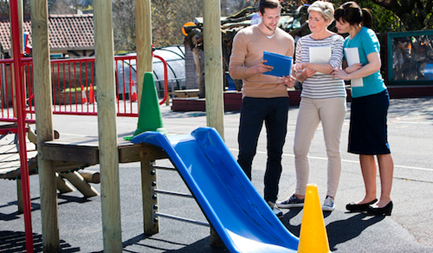
Create safe, age‑appropriate play spaces for children aged 2–5 in public settings such as parks, nurseries, schools, and community centres:
* Specification examples: Industry examples, such as those in WillyGoat's durable playground equipment, illustrate common specifications for community-grade toddler-scaled structures.
* Size matters: Choose structures no taller than a toddler’s natural reach. Hand‑grips and steps should be designed for small hands and short strides to prevent over‑stretching.
* Smooth and sturdy: Opt for rounded edges and enclosed fasteners to minimise scrapes. Select corrosion‑resistant, weather‑proof materials that won’t splinter or rust in outdoor, high‑traffic environments.
* Safer surfacing: Provide compliant impact-absorbing surfacing such as wet pour rubber, rubber mulch, grass mats, or engineered bark beneath and around equipment, especially under climbing and sliding zones. Avoid hard surfaces like concrete.
* Inclusive access: Incorporate ramps, ground‑level play panels, sensory features, and clear circulation routes so toddlers of all abilities can participate.
* Sightlines and supervision: Arrange equipment to maintain clear visibility for caregivers and staff. Add age‑appropriate signage for users aged 2–5.
* Maintenance ready: Specify vandal‑resistant finishes, tamper‑proof fixings, and components with readily available spares. Establish routine inspections and cleaning schedules suitable for public sites.
* Standards and certification: Ensure products and surfacing meet recognised playground safety standards (e.g., BS EN 1176 and BS EN 1177 or equivalent). Keep records of certifications, inspections, and maintenance.
Warning/Important: Never install climbing structures directly over concrete or packed dirt. Even short falls can cause injury. Always prioritise energy-absorbing surfaces like deep wood chips, rubber mulch, or specific safety mats to cushion inevitable tumbles.
Time to Act
Choose one idea, circle it on the calendar, and plan a 30-minute outdoor playdate this week. A safe space filled with age-appropriate gear turns simple moments into lifelong memories. Explore quality options when you’re ready to level up the yard, then watch the giggles take off.
Author profile: WillyGoat is the leading online retailer of commercial playground equipment for schools, parks, churches, daycares, and communities across America.